
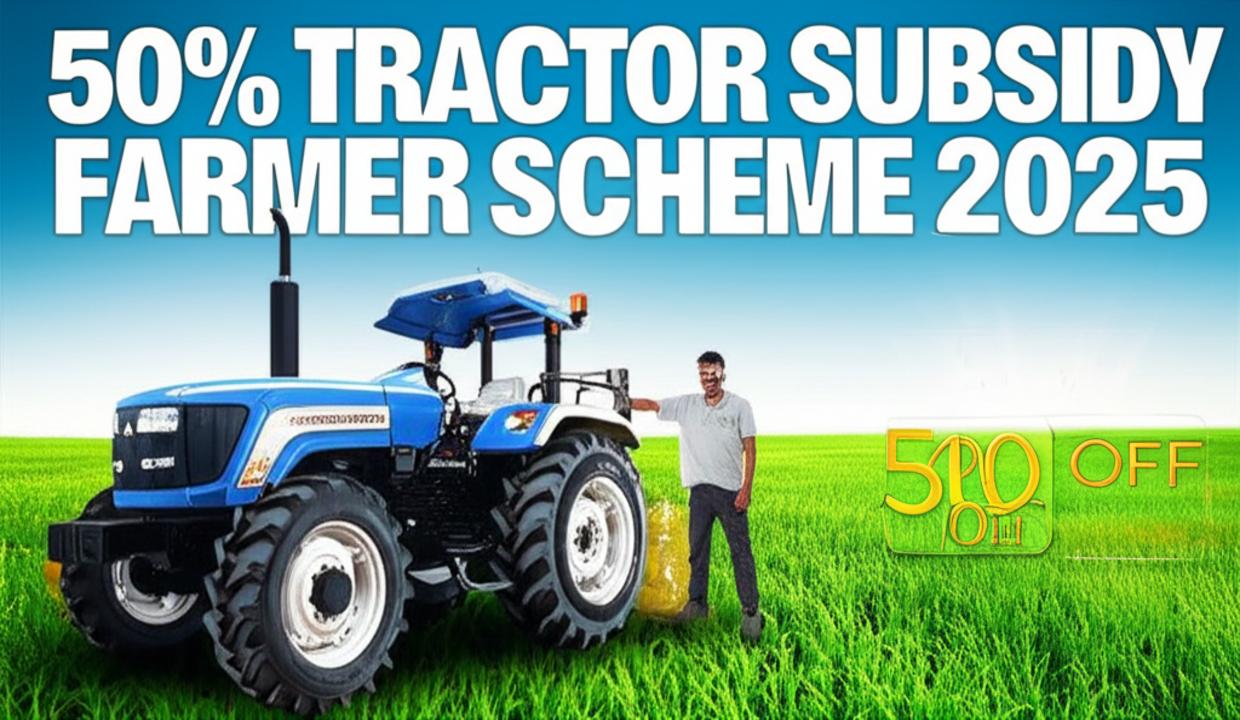
Are you a farmer looking to modernize your agricultural practices without breaking the bank? The year 2025 brings a golden opportunity with the much-anticipated Farmer Tractor Scheme 2025. This groundbreaking initiative promises a substantial 50% subsidy on the purchase of new agricultural machinery, including powerful tractors. It’s designed to revolutionize farming in India, making advanced equipment accessible to every farmer, from small landholders to large-scale cultivators.
This comprehensive guide will walk you through every aspect of this vital government tractor scheme. We’ll explore who is eligible, how to apply, and the immense benefits of integrating modern technology into your farm. Get ready to understand how this kisan tractor yojana can significantly boost your productivity and profitability. The future of farming is here, and it’s more mechanized and efficient than ever before.
Decoding the Farmer Tractor Scheme 2025: A Game-Changer for Agriculture
The Farmer Tractor Scheme 2025 stands as a beacon of progress for the Indian agricultural sector. At its core, this initiative aims to accelerate farm mechanization across the nation. By providing a generous 50% tractor subsidy, the government seeks to reduce the heavy reliance on manual labor, enhance operational efficiency, and ultimately increase agricultural output. This scheme is particularly beneficial for small, marginal, and women farmers, empowering them with the tools needed for modern farming.
Under this visionary program, financial assistance is extended for a wide array of agricultural machinery. While tractors are a primary focus, the subsidy also covers essential implements like seed drills, rotavators, disc harrows, and multi-crop planters. The exact percentage of the subsidy, up to 50%, can vary based on specific farmer categories and the type of machinery being purchased. This targeted approach ensures that the most deserving farmers receive the maximum support.
The core objective is clear: to bridge the gap between traditional and mechanized farming. By making high-quality, government-certified machines more affordable, the farmer tractor scheme is set to usher in an era of enhanced productivity and sustainability. It’s not just about providing a machine; it’s about empowering farmers with the means to achieve greater success and secure their livelihoods. The scheme reflects a strong commitment to modernizing the backbone of India’s economy.
Eligibility Criteria: Who Can Avail the Tractor Subsidy 2025?
To ensure the benefits of the tractor subsidy 2025 reach those who need them most, certain eligibility criteria have been established. Understanding these requirements is the first crucial step for any farmer considering applying for the scheme. The process is designed to be fair and transparent, prioritizing genuine agricultural needs.
Firstly, applicants must be registered farmers, typically requiring proof of agricultural land ownership. This ensures that the subsidy is directed towards individuals actively involved in farming. For tractor-driven implements, it’s often a prerequisite that the tractor itself is already registered in the farmer’s name, confirming their operational capacity.
A key rule is that farmers cannot have claimed a subsidy for the same machine in the last three years. This prevents repetitive claims and ensures equitable distribution of resources. Furthermore, there might be limitations on the number of machines subsidized annually, often capping it at two or three different types per farmer. These rules help spread the benefits widely across the farming community, fostering broader mechanization.
It’s also important to note that the eligibility criteria can sometimes vary slightly by state and even by district. Farmers are encouraged to consult their local agricultural department for the most precise and up-to-date information. Specific categories of farmers, such as small, marginal, and women farmers, often receive priority or higher subsidy rates, aligning with the scheme’s inclusive goals.
The Application Process for Kisan Tractor Yojana: Your Step-by-Step Guide
Applying for the Kisan Tractor Yojana, or the Farmer Tractor Scheme 2025, involves a structured process designed for efficiency. While specific steps might differ slightly depending on the state, the general outline remains consistent. Most applications can now be submitted either online or through designated offline channels, simplifying access for farmers.
Typically, the process begins with registration on the state’s agriculture department portal or by obtaining an application form from the local agricultural office. Farmers will need to provide various documents, including proof of identity, land ownership documents, bank account details for subsidy disbursement, and a recent passport-sized photograph. It’s crucial to have all these documents ready to avoid delays in processing your application.
Once submitted, applications undergo a thorough verification process by a designated committee, often at the local district level. Due to high demand, selection for the subsidy sometimes occurs through a ‘draw of lots’ system, ensuring fairness. This transparent mechanism allows all eligible applicants an equal chance to receive the support. Farmers are typically notified of their selection status through SMS or official communication.
A significant aspect of the scheme is that subsidies are generally disbursed post-purchase. This means farmers first buy the approved machinery, and after verification by the committee, the subsidy amount is directly credited to their registered bank accounts. This ensures that the funds are used for their intended purpose, directly benefiting the farmer. For detailed steps and forms, visiting the relevant state government agricultural department website, such as Haryana’s mechanization schemes portal, can provide specific instructions.
Beyond Tractors: What Agricultural Machinery is Covered?
While the title emphasizes the Farmer Tractor Scheme 2025, it’s essential to understand that this initiative extends far beyond just tractors. The vision is to promote holistic farm mechanization, covering a wide range of agricultural implements that enhance efficiency across various farming operations. This comprehensive approach ensures that farmers can invest in a suite of tools tailored to their specific needs.
Beyond the core tractor unit, the 50% tractor subsidy can also be availed for crucial attachments and specialized machinery. This includes, but is not limited to, modern seed drills for precision planting, robust rotavators for efficient soil preparation, and versatile disc harrows for tillage. Multi-crop planters are also often part of the eligible list, allowing farmers to diversify their cultivation with ease.
A critical condition for any machinery to qualify for the subsidy is its certification. Machines must be tested and approved by Government of India-approved testing institutes. This stringent requirement ensures that farmers receive high-quality, durable, and efficient equipment that truly adds value to their operations. It prevents the influx of substandard machinery and guarantees performance.
The inclusion of such a diverse range of eligible agricultural machinery under schemes like the Krishi Yantra Scheme reflects a strategic move. It aims to make every aspect of farming, from land preparation to harvesting, more mechanized and less labor-intensive. This broad coverage is a testament to the government’s commitment to modernizing agriculture from the ground up, providing comprehensive support to Indian farmers.
The Transformative Impact: Why Mechanization Matters for Indian Farmers
The push for farm mechanization, spearheaded by the government tractor scheme, is not merely about providing equipment; it’s about enacting a profound transformation in the lives and livelihoods of Indian farmers. The benefits of adopting modern agricultural machinery are multifaceted, impacting everything from daily operations to long-term profitability and sustainability.
Firstly, mechanization significantly increases operational efficiency. Tasks that once took days with manual labor can now be completed in hours with a tractor and its implements. This allows for timely agricultural operations, such as sowing and harvesting, which are crucial for optimal yield. Reduced turnaround times mean farmers can manage their land more effectively and potentially undertake multiple cropping cycles.
Secondly, it dramatically reduces the burden of physical labor. Farming is an arduous profession, and mechanization eases the physical strain on farmers and their families. This not only improves their quality of life but also makes farming a more attractive profession for younger generations. It addresses the challenge of labor shortages, which is a growing concern in many rural areas.
Moreover, mechanization leads to improved precision and reduced input waste. Modern machines are designed for efficiency, ensuring optimal utilization of seeds, fertilizers, and water. This precision contributes to higher yields and better quality produce, directly translating into increased farmer incomes. Ultimately, schemes like the 50% tractor subsidy are vital instruments in making Indian agriculture more resilient, productive, and prosperous for years to come. #FarmMechanization #RuralDevelopment
State-Specific Variations: Tailoring the Government Tractor Scheme for Local Needs
While the overarching vision for the Farmer Tractor Scheme 2025 is national, its implementation often sees variations at the state level. This decentralized approach allows individual states to tailor the government tractor scheme to their unique agricultural landscapes, climate conditions, and specific farmer demographics. These state-specific initiatives often complement the broader central schemes, maximizing their impact.
For instance, states like Haryana have been at the forefront of agricultural mechanization. Haryana’s schemes provide substantial subsidies, often in the range of 40-50%, on a wide array of farm machinery, including tractors. This proactive approach by the state government encourages rapid adoption of modern equipment, particularly among small and marginal farmers, by making it financially viable.
Similarly, states like Rajasthan have their own versions of the Krishi Yantra Yojana, providing similar financial assistance. These state-level programs often have their own specific application windows, eligibility nuances, and lists of preferred machinery based on local agricultural practices. Farmers should always check the official websites of their respective state agriculture departments for the most accurate and localized information regarding these subsidies.
These state-specific initiatives demonstrate a commitment to addressing localized needs and challenges. They ensure that the benefits of farm mechanization are not just a national policy but a tangible reality for farmers in diverse regions, from the plains of Punjab to the arid lands of Rajasthan. This collaborative effort between central and state governments strengthens the overall support system for Indian agriculture.
Embracing the Future: The Rise of Electric Tractors and Subsidies
As the world shifts towards sustainable practices, the agricultural sector is also witnessing a quiet revolution with the emergence of electric tractors (e-tractors). Recognizing their potential for reducing emissions and operating costs, some states are now integrating subsidies for these innovative machines into their broader tractor subsidy 2025 programs. This marks a forward-looking step in greening agriculture.
Haryana, for example, has taken a progressive stance by offering a significant subsidy of up to 50% (with a maximum cap of ₹5 lakhs) for farmers purchasing e-tractors that meet safety standards. This initiative aims to encourage the adoption of environmentally friendly farming equipment. Electric tractors offer several advantages, including lower running costs due to cheaper electricity compared to diesel, and reduced noise pollution, improving working conditions for farmers.
However, the uptake of e-tractors still faces considerable challenges. Issues like limited supply from manufacturers, higher upfront purchase prices compared to conventional diesel tractors, and concerns about charging infrastructure in rural areas remain significant hurdles. Addressing these factors will be crucial for the widespread adoption of electric farm machinery in the future.
Despite these challenges, the inclusion of e-tractors in subsidy schemes highlights a clear direction for the future of farm mechanization. It signals a move towards more sustainable and technologically advanced farming practices, with the potential to reduce agriculture’s carbon footprint. For a deeper dive into the challenges and opportunities of e-tractors in India, you can explore resources discussing challenges facing e-tractors in India.
Global Perspectives: Learning from International Farm Equipment Grants
The concept of government support for farm mechanization is not unique to India. Many countries globally recognize the importance of modernizing their agricultural sectors to enhance productivity, ensure food security, and improve animal welfare. Examining these international models can provide valuable insights into the broader scope and impact of such initiatives.
For instance, countries like the United Kingdom operate similar grant schemes, such as the Farming Equipment and Technology Fund (FETF) 2025. This program offers grants of 40-50% for specific items of farming equipment, often capped at a certain financial limit per farm. The objectives are broadly similar: to improve productivity, enhance animal welfare standards, and promote sustainable practices.
A key difference in some international schemes is the emphasis on financial viability assessments. Applicants may need to demonstrate the economic benefits and sustainability of their proposed investments. While the Indian Farmer Tractor Scheme 2025 focuses heavily on accessibility and equity for small and marginal farmers, the global perspective highlights diverse approaches to achieving common agricultural goals.
These parallel efforts worldwide underscore the universal understanding that modernizing agriculture through mechanization and financial support is crucial for a thriving rural economy and a sustainable food supply. The shared goals of increasing efficiency, reducing labor, and improving overall farm resilience resonate across continents, making such schemes vital for agricultural progress everywhere.
Complementary Support for Farmers: A Holistic Approach
The Farmer Tractor Scheme 2025, while impactful, is part of a larger ecosystem of government support aimed at bolstering the agricultural sector. India’s approach to farmer welfare is holistic, integrating various schemes that address different aspects of farming, from income support to risk management. These complementary programs work in tandem to create a robust safety net and promote overall prosperity for farmers.
One of the most significant initiatives is the Pradhan Mantri Kisan Samman Nidhi (PM-KISAN), which provides direct cash transfers to eligible farmer families. This direct income support helps farmers meet their daily expenses, invest in inputs, and maintain financial stability, indirectly supporting their ability to consider mechanization investments.
Another crucial scheme is the Pradhan Mantri Fasal Bima Yojana (PM-Fasal Bima), a crop insurance program that provides financial support to farmers suffering crop loss or damage due to unforeseen events. By mitigating risks, this scheme instills confidence in farmers, encouraging them to adopt modern practices and make long-term investments, including in agricultural machinery.
Together, these programs create a comprehensive framework that addresses income stability, risk management, and modernization. The synergy between schemes like the 50% tractor subsidy, PM-KISAN, and PM-Fasal Bima ensures that farmers receive multi-faceted support, enabling them to pursue agriculture as a viable and profitable livelihood. You can read more about comprehensive government schemes for farmers in 2025 to understand the full spectrum of support available.
Watch More in This Video
For a visual guide and additional insights into related government initiatives, watch this informative video:
Frequently Asked Questions (FAQ)
- What is the maximum subsidy available under the Farmer Tractor Scheme 2025?
The maximum subsidy available is generally up to 50% of the cost of the agricultural machinery, including tractors. The exact percentage may depend on the farmer’s category (e.g., small, marginal, women farmers) and the specific type of machine being purchased. - How often can a farmer apply for the tractor subsidy?
Farmers are typically eligible to claim a subsidy for different machines. However, a specific rule often states that a farmer cannot claim a subsidy for the same machine type within a three-year period from the previous claim. There might also be a cap on the number of different machines subsidized annually. - Are all types of tractors covered under the scheme?
The scheme covers a wide range of agricultural machinery, including various types of tractors, seed drills, rotavators, and other implements. However, the machines must be certified by Government of India-approved testing institutes to qualify for the subsidy, ensuring quality and performance. - What documents are required to apply for the Kisan Tractor Yojana?
Commonly required documents include proof of identity (Aadhaar card), proof of agricultural land ownership, bank passbook details, a passport-sized photograph, and any specific caste or category certificates if applicable (for special benefits). Farmers should check state-specific requirements. - How is the subsidy disbursed to farmers?
The subsidy amount is typically disbursed directly into the farmer’s registered bank account after the purchase of the eligible machinery and successful verification by the designated local district-level committee. This ensures transparency and direct benefit transfer.
Conclusion: Paving the Way for a Mechanized and Prosperous Agricultural Future
The Farmer Tractor Scheme 2025, with its transformative 50% subsidy, marks a significant leap forward for Indian agriculture. This vital kisan tractor yojana is more than just financial aid; it’s an investment in the future of farming, promising increased productivity, reduced labor, and enhanced incomes for millions of farmers across the nation. By making modern equipment, including advanced tractors, accessible and affordable, the government is empowering farmers to embrace efficiency and sustainability.
As we move towards a more mechanized and technologically advanced agricultural landscape, schemes like this government tractor scheme will play a pivotal role. They demonstrate a clear commitment to supporting the backbone of India’s economy, fostering resilience, and ensuring food security. For farmers, it’s an unprecedented opportunity to upgrade their tools and cultivate a more prosperous future. We encourage you to explore the scheme details thoroughly and seize this valuable opportunity to transform your farming operations. If you found this article helpful, please consider sharing it with fellow farmers and enthusiasts, or learn more about us and discover other insightful articles on agricultural schemes.
Disclaimer: All images and videos are sourced from public platforms like Google and YouTube. If any content belongs to you and you want credit or removal, please inform us via our contact page.